
Estimated Reading Time: 7 minutes
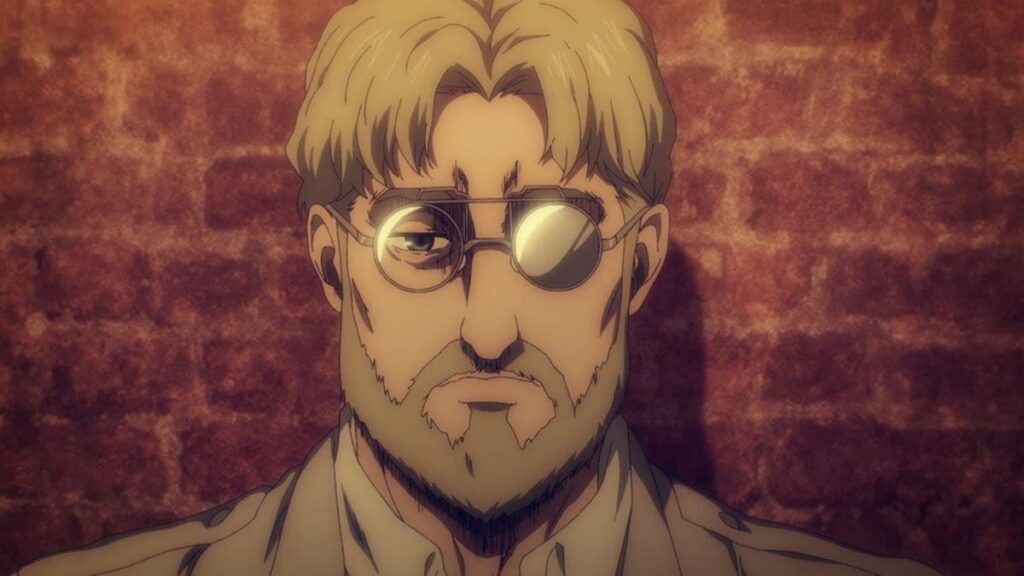
As an Attack on Titan “evangelist,” I harbour an intense affection for almost every character in the series. This isn’t mere idolisation or a simple crush; it’s a complex, visceral love that triggers profound emotional responses. Curiously, Zeke Yeager was the only exception. From start to finish, my feelings toward him remained tepid—neither hatred nor affinity, simply a void of emotion.
Until one day, a repressed memory from my primary school years at an English cram school resurfaced, and it hit me: Wait… was I essentially a “mini-Zeke” as a child?
I remember working on some exercises when the foreign teacher came over to check my work. After marking the page, he stood there in total silence, refusing to leave. Being someone who craves personal space (and possessing a particular loathing for the sound of others breathing), I looked up at him. His brow was furrowed, his face darkening as he muttered to himself: “What… what the hell is that… why is it… what?”
I looked down at where he was staring. Tucked beneath my exercise book was another open textbook, covered in scribbles and scrawled sentences—the shaky, uneven handwriting of a nine-year-old, paired with awkward, stunted grammar: “What’s the point of this?”, “I don’t suppose to live”, “Everyone in my world is laughing”, “Why am I here?”, “Love is selfish”, “How to die without pain”.
I don’t recall exactly what the illustrations looked like, only that they were fluid, liquid-like images. There was also a pitch-black circle, gouged into the paper from the repetitive pressure of a pencil, sinking through three layers of pages (that glossy paper was terrible to write on, but remarkably resilient). At the time, I felt nothing while writing these things. I saw no problem with them, so I felt no need to hide them.
It was only when I saw the sheer horror on my teacher’s face that my “good student” instincts kicked in: “Oh shit.” For the first time, I wondered: Is this bad? Is this repulsive? Am I abnormal? Coming to my senses, I flushed crimson and shielded the book with my arms. We stood in a silent, awkward stalemate for a few seconds before he drifted away with light, ghostly footsteps, as if afraid to make a sound.
I can’t remember what was going through my head then, but I grew up regardless—entirely devoid of what one might call “insight into my own condition” ╮(╯▽╰)╭
It wasn’t until adulthood, when I encountered Schopenhauer, the “Will to Live,” and Nihilism, that I realised my younger self was a textbook nihilist. Artists, philosophers, and psychologists, are those who possess a piercing clarity regarding the nature of things—provide the practical, structured lenses through which we can excavate these abstract, ineffable inner feelings.
So, why the lack of emotion toward Zeke? I suspect three possibilities, though I cannot say which holds the most truth:
- Like repels like.
- It was like looking at a former self; the familiarity bred a lack of novelty, stifling the passion for exploration one feels when discovering a “new world.”
- It reflected a quiet inability to love that version of myself.
Having navigated self-discovery, the wider world, and several “quiet storms,” my subconscious has slowly drifted toward a more existentialist, perhaps “childishly idealistic” innocence.
But does it matter? I used to fear being called immature or “un-adult.” Now, I boldly admit: I don’t want to grow up. I want to live like a child. In Mandarin, people often say “Men will be boys until the day they die” or “Men have the simplest happiness,” yet women are told “A girl changes 18 times between childhood and womanhood” or “A woman’s mind is hard to fathom like a needle at the bottom of the sea.” But a woman should be allowed to live like a “shoujo” (young girl) too!
Wang Xiaobo perfectly summarised my current philosophy in The Golden Age:
“I came into this world not to reproduce, but to see how the flowers bloom and how the water flows. To see the sun rise and the sunset fade. I live simply to understand some truths and encounter some interesting things. Life is a series of coincidences; I am merely searching for the cause and effect within it.”
What struck me with both surprise and emotion was how this mirrors Zeke’s philosophy—“Is it all for the sake of multiplication again?”—yet their underlying intellectual paths are diametrically opposed. It feels like a summary of my journey: many thoughts remain unchanged, yet the core beneath the surface has shifted entirely.
You watch the flowers bloom, and then what? There is no “then,” much like Zeke and his game of catch. But it is precisely these small, repetitive acts—the pitching and catching—that make one think, “Perhaps living once more wouldn’t be so bad after all?”
Extended Thoughts: “Mother Tongue Awkwardness”
I deeply understand those for whom switching languages feels like switching personalities. I think anyone who speak more than 1 language would understand this feeling.
Why did a nine-year-old choose unfamiliar English to write those words? Even after all this time, I am certain I could never have written them in Mandarin. It had to be English. Es muss sein!
Looking back at my old journals, I used a vast amount of English, especially when dealing with things that were loathsome, emotional, confrontational, or shameful. As I grew up, I came to realise that using a new, non-internalised language provides a sense of distance. It allows one to express deep-seated thoughts in a way that feels more comfortable, safe, and less “cringe.”
I like to call this “Mother Tongue Awkwardness.”
It explains why I used to only listen to English songs. Beyond the preferences over different arrangements, singing in Mandarin always felt affected and overly sentimental. Saying “I love you” versus「我愛你」carries an entirely different weight. Even writing it in my native tongue felt embarrassing; I have no memory of ever speaking those words in my life.
However, I’ve now grown accustomed to writing these long-form reflections in my mother language, and I even post Mandarin song covers. My symptoms have clearly eased—perhaps a sign that my inner self is finally becoming more comfortable with its own reality.