
Estimated Reading Time: 6 minutes
Have you been stumbling across this kind of content on your feed lately? “Make a successful prediction in seconds and multiply your earnings!” Recently, prediction markets like Polymarket and Kalshi have been aggressively blitzing the internet with ads. Someone on TikTok even screamed, “Kalshi just paid off two years of my rent!” It sounds like as long as you’re smart enough, you can easily monetise your knowledge, right?
But the truth is, over 70% of users lose money on these prediction platforms. After analysing 1.6 million accounts, The Wall Street Journal reached a brutal conclusion: a staggering 67% of the profits flow to a minuscule 0.1% of accounts. Today, let’s break down exactly how the capital behind this prediction game truly operates.
The mechanics of these platforms are remarkably simple: a binary proposition betting on whether an event will happen. Guess right, you get paid; guess wrong, your investment goes to zero. On the surface, there is no “house,” making it seem incredibly fair. But remember: no house doesn’t mean no opponents. Your true adversaries on these platforms are professional quantitative firms—institutions that burn hundreds of thousands of dollars annually on real-time big data, leverage AI algorithms, and ruthlessly execute hundreds of thousands of trades daily.
Take a real-world example. One former professional poker player executes 60 trades per minute on the platform, adjusting quotes 30 times a second. He bluntly stated, “Retail investors have absolutely no chance of winning.” Another full-time trader, backed by $500,000 in VC funding, remarked, “Our only competitors are other market makers.” What does this mean? It means that in the eyes of these apex predators, retail traders betting on gut instinct aren’t even considered competition; they are, at best, lambs to the slaughter providing liquidity for the pros.
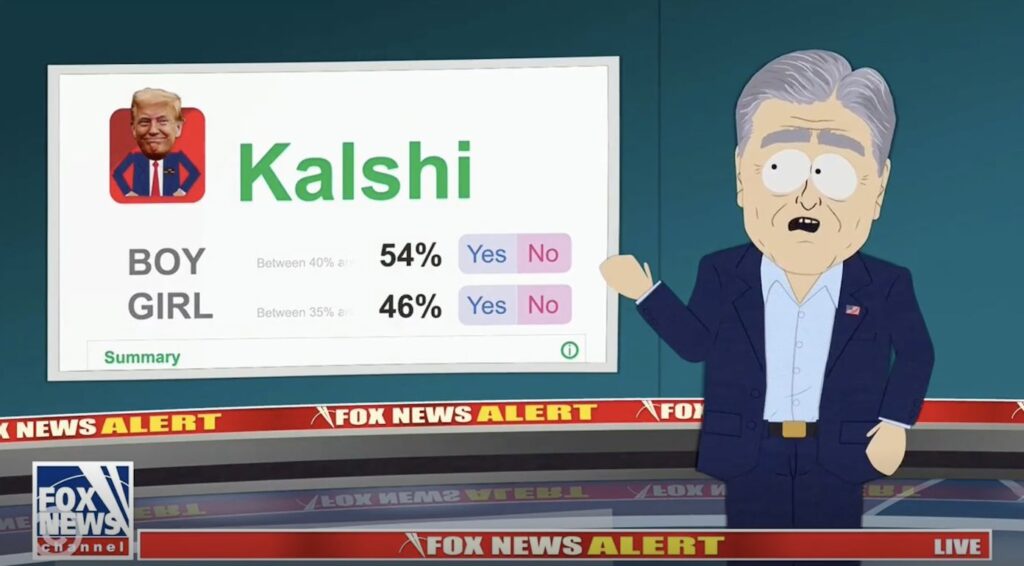
There is an even more vicious trap on these platforms known as “Mentions Markets”—betting on whether a celebrity will say a specific word in public. After analysing over 35,000 such trades, the WSJ found that the ROI for retail investors here is actually worse than playing Las Vegas slot machines.
John Pederson, a 33-year-old unemployed chef, is a harrowing example. Initially on a hot streak, he rolled $2,000 into $41,000. He then decided to go all-in, betting that a certain artist would say the word “rapper” on a talk show. The result? He saw a YouTube clip confirming A$AP Rocky did indeed say the word. However, he missed a fatal rule in the platform’s fine print: “Resolution is based strictly on the televised broadcast.” As fate would have it, the NBC network edited that exact segment out for the TV airing. Because of that single edit, his $40,000+ vanished instantly. Having lost his entire life savings, he was forced to move into a homeless shelter in Detroit.
This wasn’t just a bout of bad luck for Pederson; it was an asymmetrical, systemic slaughter of the retail investor. In prediction markets, the platforms are guaranteed to win by taking a cut of the fees. As long as retail traders keep placing blind bets based on intuition, and institutional pros keep ruthlessly harvesting them while providing liquidity, the platform remains the ultimate victor.
While Kalshi officially insists that more people make money on their platform than in traditional day trading, the brutal data tells a different story: for every profitable player, there are 2.9 losers acting as collateral damage.
This lays bare a harsh reality: the financial markets are profoundly rigged against the little guy. Without massive computing power or first-hand exclusive information, retail traders who day-trade blindly or bet on intuition are just sitting ducks—ultimately, just fish on a chopping block for the institutional sharks.
Over to you: Have you ever placed a bet on a prediction market? What are your thoughts on this ecosystem? Leave a comment below. And visit the main page for more deep-dive business and marketing insights!